The year · October is underlined
| Region | J | F | M | A | M | J | J | A | S | O | N | D |
|---|---|---|---|---|---|---|---|---|---|---|---|---|
| Apollonia |
Dated facts · every figure carries the day it was checked
| What | Value | Checked |
|---|---|---|
| Entry | 600 lek for an adult, 180 lek ages 12 to 18 and students, free under 12; the monastery museum is covered by the same ticket. Cash in lek at the gate. | 2026-08-20 · Albania Guidebook, Apollonia |
Getting there
car. About twelve kilometres west of Fier, roughly halfway between Vlorë and Berat, which makes it a stop on a driving day rather than a destination. There is no useful bus, and the last stretch is a signed side road.
Parking: Car park at the entrance.
Photography
Best light: morning, golden.
An open hill with a long view over the Vjosa plain toward the sea, so the site works in raking light and goes flat in the middle of the day. The monastery courtyard holds shade when nothing else on the hill does. Check drone requirements with the AAC before travelling.
Drone: not confirmed. Albania's registration requirement is reported differently by every secondary source, so verify with the AAC before you fly.
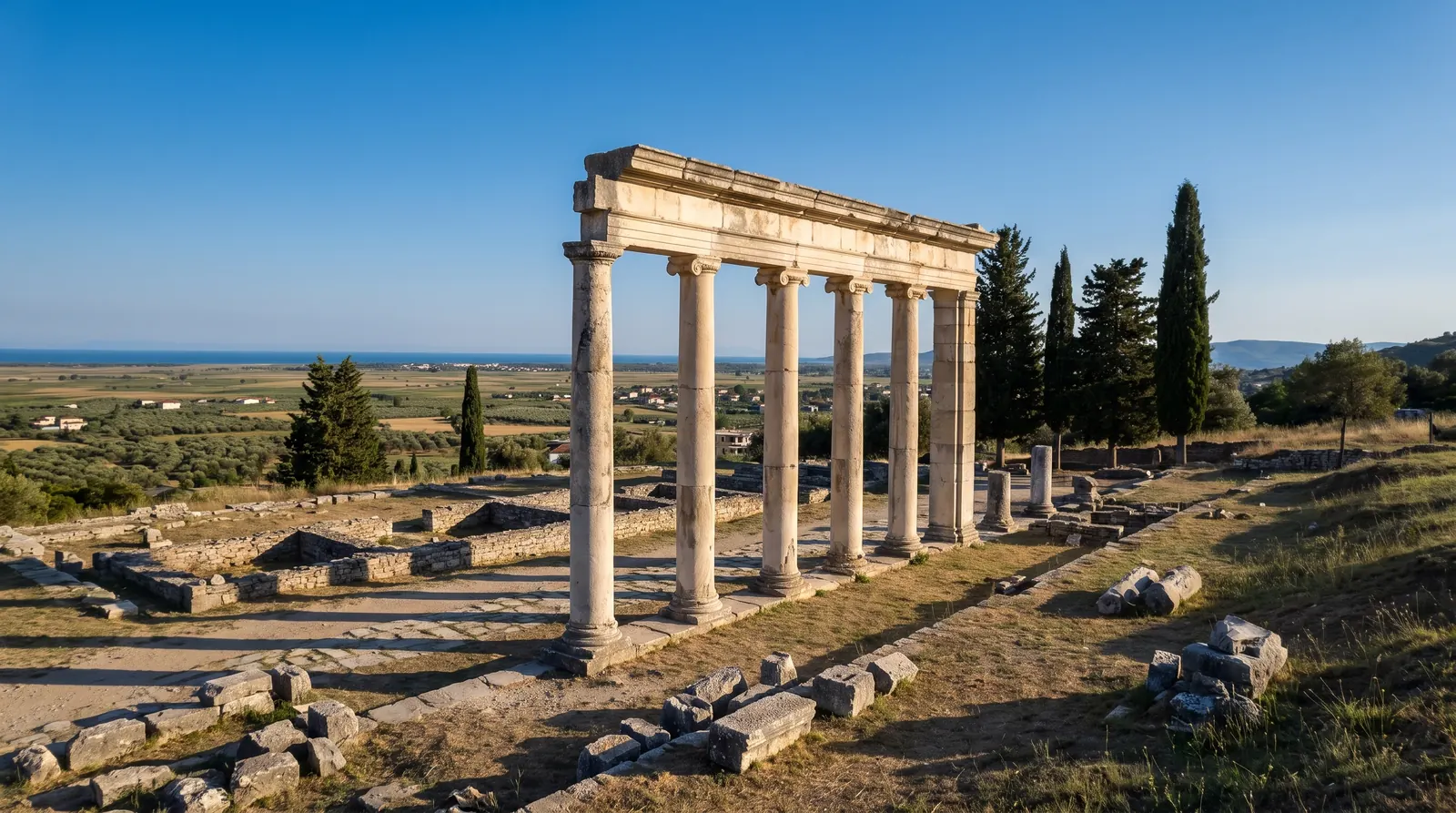
Apollonia was founded by Greek colonists in the sixth century BC and grew into one of the larger cities on this coast, with a harbour on a river that has since silted up and moved. What is left is a hillside of excavated streets, the restored front of the bouleuterion that is the site's one famous image, and a great deal of unexcavated ground.
In the middle of it stands the monastery of Saint Mary, built in the thirteenth century out of the classical stone around it, with a museum in the cloister. It is the two layers sitting on each other that make the site more interesting than its size suggests.
There is a fee at the entrance. Come in April or in October: the hill is open, there is no shade on it, and in July it is a hot climb with flat light on everything.
Nearby
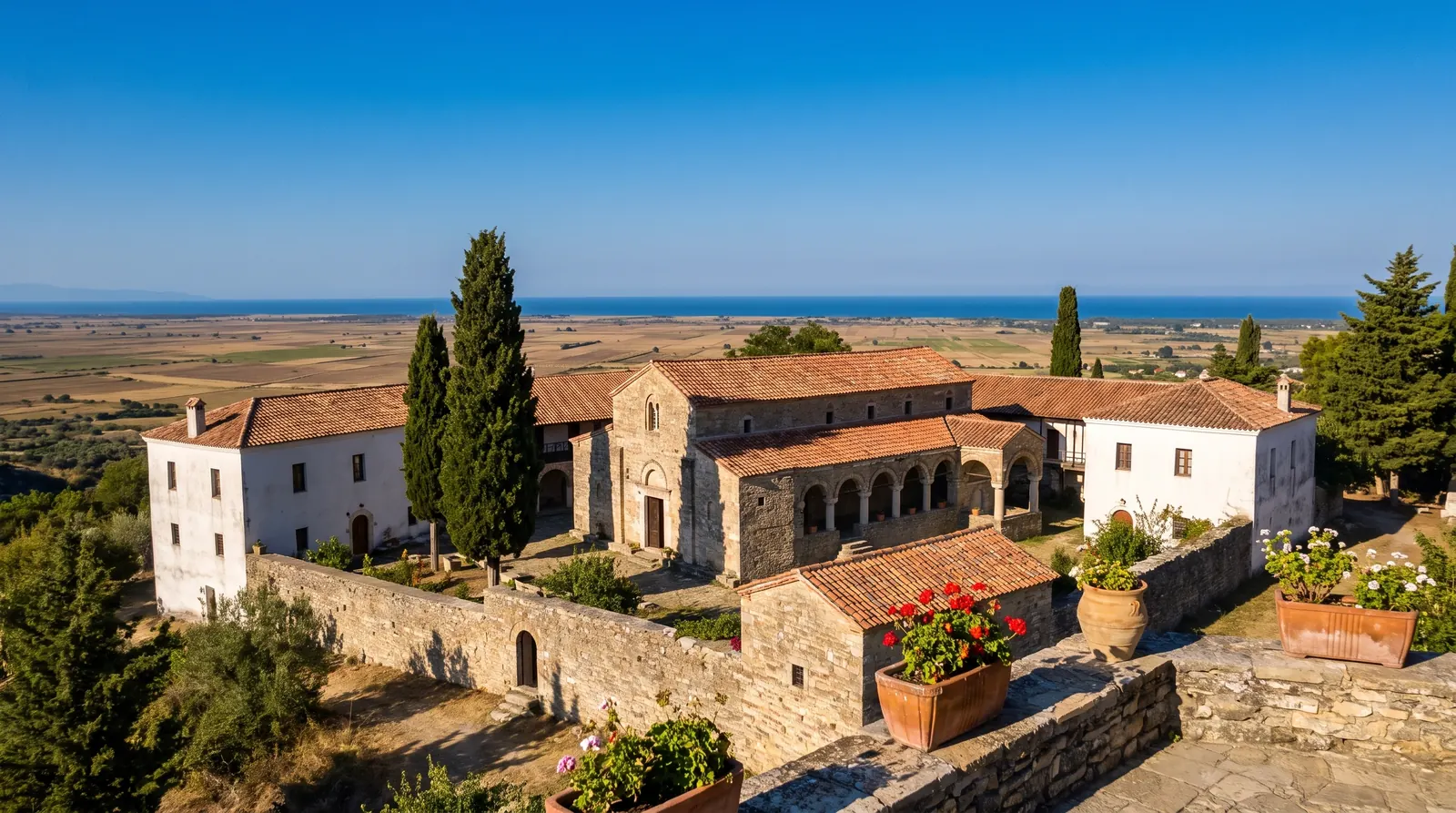 AI imageArdenica MonasteryA working Orthodox monastery on a ridge above the Myzeqe plain, half an hour from Apollonia and open when almost nothing else inland is.
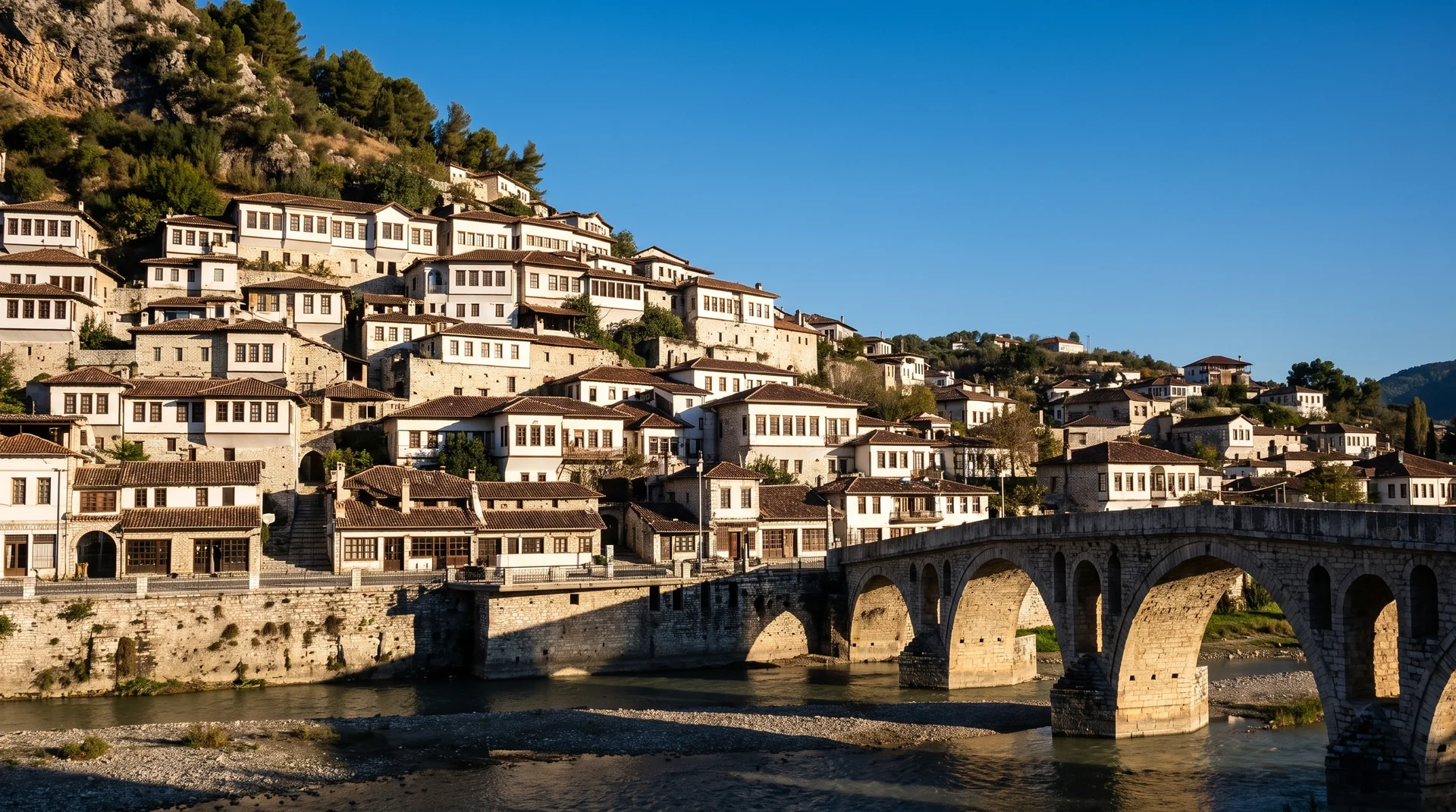 AI imageBeratA UNESCO hillside of stacked Ottoman windows above the Osum, with a castle that is still a lived-in quarter and wine country around it.