[ Every place, with its year ]
78 profiles. The column on the right is this month’s verdict, not a rating.
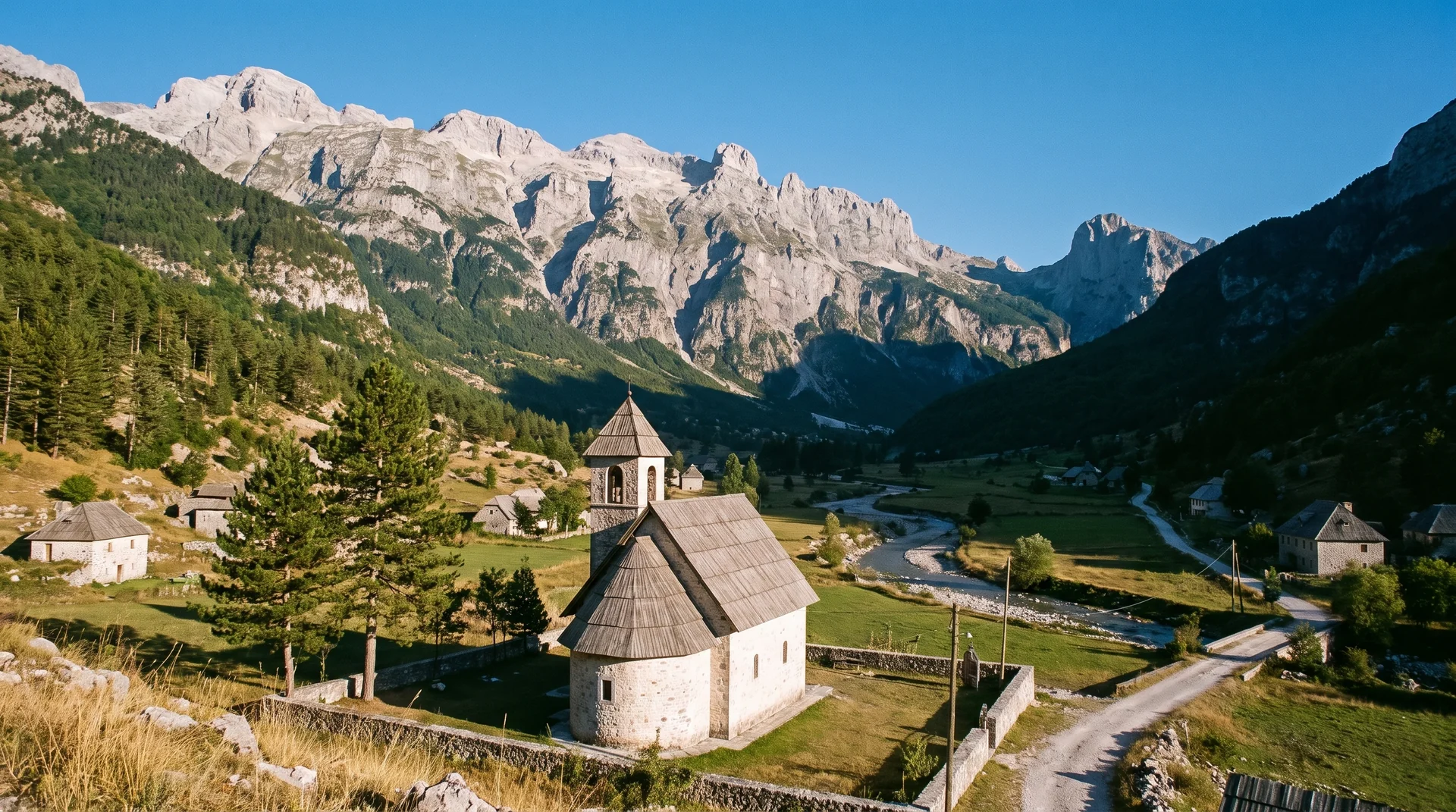
- ThethA stone-church village on the floor of the Albanian Alps, at the end of a paved road that snow can close all winter.
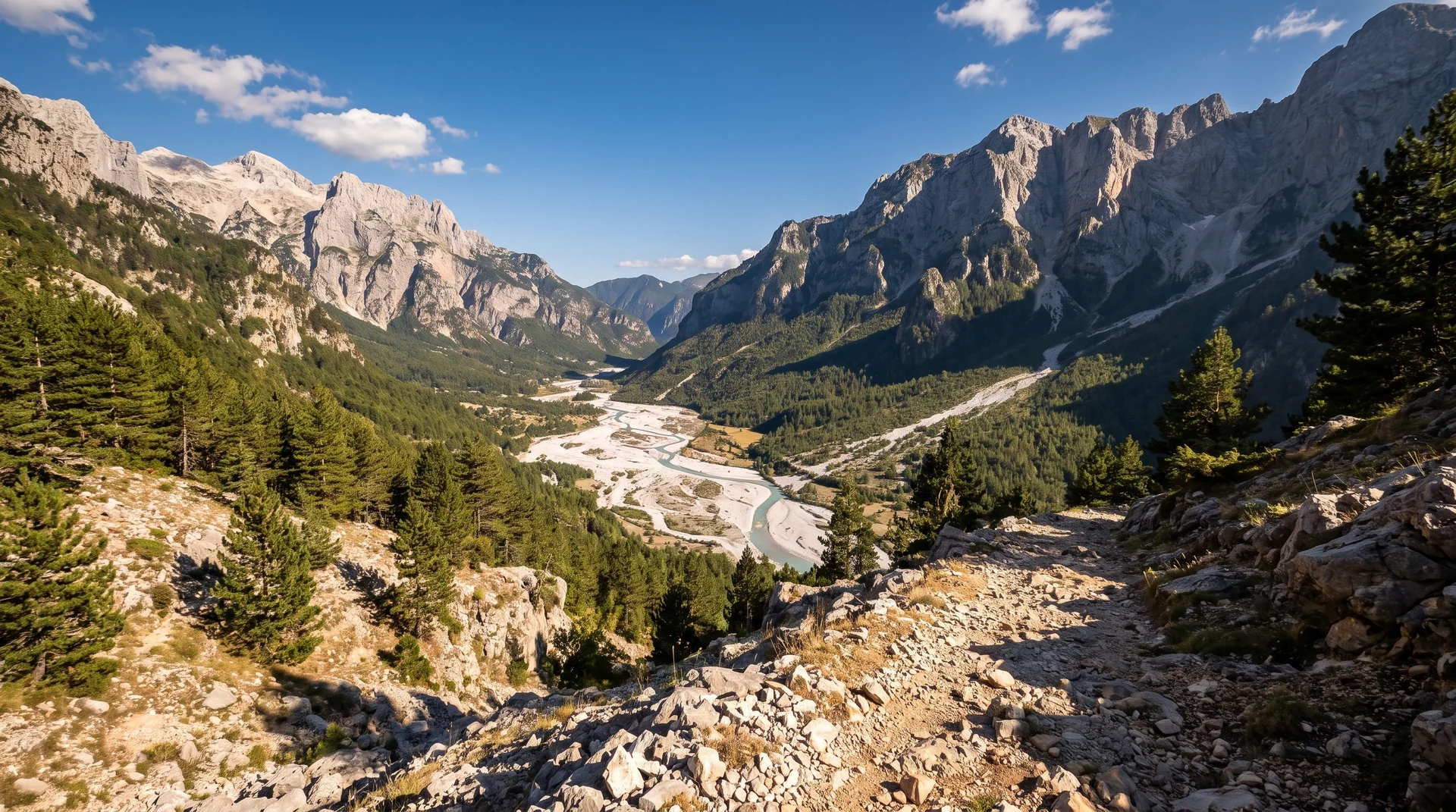
- Valbonë ValleyThe other side of the pass: a wide gravel riverbed under limestone peaks, reached by ferry and a road transfer rather than by mountain road.
- ShkodërThe northern hub: the castle above the lake, the morning shuttle to Theth, and the road to the Koman ferry. Almost every Alps trip passes through it twice.
- Lake KomanA reservoir through a karst gorge that doubles as the only sensible way into Valbonë. Transport and attraction in one, for seven months of the year.
- BeratA UNESCO hillside of stacked Ottoman windows above the Osum, with a castle that is still a lived-in quarter and wine country around it.
- GjirokastërThe stone town: slate roofs stepping down a hillside under a fortress, above the Drino valley and an hour from the southern springs.
- KsamilFour small islets in shallow turquoise water, and the most crowded and most expensive stretch of sand in Albania.
- HimarëThe Riviera town that stayed a town: pebble coves under olive hills, a working centre behind them, and prices that have risen at half Ksamil's rate.
- ButrintA Greek, Roman, Venetian and Ottoman site stacked on one wooded peninsula between a lagoon and the channel to Corfu.
- Llogara PassThe old SH8 over the top, through black pine and down in switchbacks to the Riviera. Since July 2024 a tunnel carries the through traffic, so the pass is now the drive you choose.
- TiranaWhere nearly every Albania trip starts and ends: the only airport with scheduled flights, the road hub, and a first or last night rather than a week.
- SarandëThe south's port and its practical base: ferries from Corfu, Butrint and Ksamil within half an hour, and a waterfront that fills in July.
- FierzëThe upstream end of the Koman ferry: a dam, a landing and the road head for the Valbonë valley, and it works for about seven months of the year.
- RazëmA forested plateau at around a thousand metres an hour north of Shkodër, cool enough in July to be the reason to drive up.
- Rozafa CastleThe castle over the point where three rivers meet, three kilometres out of Shkodër, and the one big view in the north that is a drive rather than a hike.
- Shala RiverA clear mountain river running into the Koman reservoir, reached by day boat from Koman or from Fierzë and open for exactly as long as the ferry is.
- KrujëSkanderbeg's hill town forty minutes from Tirana: a restored bazaar, a castle on the ridge, and the easiest half-day out of the capital.
- DurrësThe country's main port and its biggest domestic beach, with the largest Roman amphitheatre in the Balkans in the middle of the town.
- Bovilla LakeA reservoir in a limestone gorge forty minutes from Tirana, up a dirt road and a short steep climb, and the easiest big view in the country.
- ApolloniaA Greek city on a hill above the Vjosa plain, with a thirteenth-century monastery built out of its stone in the middle of it and almost nobody on the site.
- Ardenica MonasteryA working Orthodox monastery on a ridge above the Myzeqe plain, half an hour from Apollonia and open when almost nothing else inland is.
- Osum CanyonA deep limestone canyon south of Berat whose rafting season runs on snowmelt rather than on the calendar, roughly March to June.
- KorçëHighland Albania at 850 m: a planned nineteenth-century centre, the country's icon collection, and the one town here with a real winter.
- DhërmiA stone village high on the slope with its beaches down a steep road below it, and the Riviera's festival week in early June.
- VlorëThe city where the Riviera starts and where independence was declared, reached by road: the airport here still has no scheduled flights.
- OrikumA small town and marina at the south end of Vlorë bay, where the Karaburun boats leave from and the Llogara climb begins.
- Karaburun PeninsulaThe longest uninhabited coast in Albania, sea caves and cliffs with no road onto any of it, and boats only from roughly May to October.
- Sazan IslandAlbania's largest island and a closed military base for most of the last century, visitable only on an organised boat and only in season.
- Gjirokastër CastleThe largest castle in Albania, along the ridge above the stone town, with a terrace that looks the length of the Drino valley.
- Blue Eye of SarandëA karst spring in an oak wood half an hour inland from Sarandë: very small, very photogenic, and taking a whole coast's day trips.
- PërmetA small town on the Vjosa, one of the last undammed large rivers in Europe, and the base for the thermal baths and the canyon above it.
- Bënjë Thermal BathsStone-walled hot pools on the bank of the Lengarica beside an Ottoman bridge, twenty minutes from Përmet, and at the mercy of the river's level.
- PogradecThe Albanian shore of Lake Ohrid: a promenade, a stony beach, karst springs south of the town and mosaics on the peninsula north of it.
- VoskopojëA village at 1,150 m that was one of the largest cities in the Balkans in the eighteenth century, with several of its painted churches still standing.
- BorshThe longest beach on the Albanian Ionian, where the length is the point: in August you walk until the umbrellas stop.
- GjipeThe best beach in Albania you can only reach on foot or by boat, and the clearest case on this coast of access doing the crowd control that regulation does not.
- QeparoTwo villages four kilometres and 450 metres apart: a swimmable pebble beach below, and a half-abandoned Ottoman stone village above that is near-empty even in August.
- Porto PalermoA triangular Ali Pasha fortress on its own peninsula inside a near-enclosed bay, with a posted price and posted hours, on a stretch the buses skip.
- PalasëThe first beach below the Llogara pass, and the standing answer to wanting the Dhërmi water without the Dhërmi prices.
- LukovëThe far-south Ionian beach that stayed uncommercialised: no beach clubs and no music, on a coast where that is now the exception.
- Divjakë-KaravastaAlbania's largest lagoon holds about five percent of the world's Dalmatian pelicans, and they are on the island from January to June, which inverts the whole country's calendar.
- Lake ShkodërThe largest lake in the Balkans, a Ramsar wetland with pelicans on it, five kilometres from a city the whole Alps circuit already passes through, and almost nobody plans a day for it.
- BogëThe last real settlement on the Shkodra to Theth road, in a glacial valley ringed by 2,000 m peaks, and the natural stop that breaks the Alps drive.
- PeshkopiThermal springs at 35 to 43.5 °C in the least-visited corner of the country, which makes this one of the few Albanian places whose best months are the cold ones.
- LinA village on a narrow peninsula into Lake Ohrid with a sixth-century basilica and its floor mosaics on the hill above it.
- ShëngjinThe north's beach town, with a protected wetland on one side and undeveloped dunes on the other, and one week in June when a festival triples it.
- Mesi BridgeAn eighteenth-century Ottoman bridge on thirteen arches over the Kir, with green water under it that people swim in.
- ByllisAn Illyrian city on a hill above the Vjosa plain, inside two and a quarter kilometres of its own wall.
- HadrianopolisA Roman theatre and its baths on the floor of the Drino valley, still coming out of the ground.
- VermoshThe northernmost village in Albania, in an Alpine valley ninety-five kilometres of mountain road from Shkodra.
- LibohovëA castle town on the far side of the Drino from Gjirokastër, which almost everybody drives past.
- DardhëA mountain village above Korçë that has been a ski place since the 1920s, and inverts this site's calendar.
- VelipojëA long sandy beach at the mouth of the Buna, inside a protected landscape, and Shkodra's own stretch of coast.
- Vjosa Wild River National ParkEurope's first wild river national park: 190 kilometres of undammed Vjosa, protected since March 2023.
- TepelenëAli Pasha's headquarters above the Vjosa, and the town where Europe's first wild river park was declared.
- Kepi i RodonitA rocky cape north of Durrës with Skanderbeg's castle on it, part of which the sea has already taken.
- The Durrës amphitheatreThe largest Roman amphitheatre in the Balkans, lost until 1966 and still partly under the houses above it.
- Kaninë CastleA fortress town above Vlorë that Justinian rebuilt, on ground fortified since the third century BC.
- Korab-Koritnik Nature ParkFive and a half hundred square kilometres along the eastern border, holding the highest ground in the country.
- Lëkurësi CastleA square Ottoman fort above Sarandë, built in 1537 to watch the Corfu strait, and it still does.
- Valbonë to ThethThe crossing between the two Alps valleys over a 1,795 m pass, walkable for about four months of the year and shut for the rest of them.
- Valbonë to ÇeremThe quiet stage of the Peaks of the Balkans, north out of the Valbonë valley to a hamlet with a handful of beds and no shop.
- The Blue Eye of ThethA long out-and-back up the Shala river to a cold blue spring pool, and a different walk depending on whether you start in Theth or at Ndërlysa.
- Grunas WaterfallThe short walk out of Theth, about two and a half hours to the fall and back, and the one to do on an arrival day.
- Mount DajtiThe ridge above Tirana, reached by cable car and walkable from March to November, which makes it the one real mountain day the city offers in the shoulder season.
- Gamti MountainTwo and a half hours above the Bovilla reservoir for the view everybody has seen in photographs, with a short rock step at the top that decides who gets it.
- The Llogara pass trailsPine forest and a 1,000 m drop to the sea, on paths that are at their best in the two shoulder seasons and at their worst in the two months everyone drives over the pass.
- Karaburun peninsula traverseA ridge walk on Albania's emptiest coastline, reached by boat, with no shade, no water and no way off it except the way you came.
- The Gjipe canyon walkA limestone gorge that ends on a beach with no road to it, which is the reason to walk in and the reason to plan the walk out.
- Lengarica canyonA walk up a river through a narrow gorge to thermal water, with the river itself deciding whether it is walkable at all.
- Mount TomorrThe hardest day on this site: 16 km and 1,200 m up a sacred mountain, on a track that decides for you whether the walk is long or very long.
- The Lura lakesA circuit of glacial lakes on a high plateau in the north-east, where the road up is a bigger obstacle than the walk itself.
- Mount KorabThe highest ground in Albania, climbed from Radomirë, on a summit the state border runs straight across.
- Maja e ÇikësThe crown of the Ceraunians from the Llogara Pass: eight hours of ridge with the whole Ionian coast below one shoulder.
- The Pëllumbas caveAn hour's climb above the Erzen gorge to a 360-metre cave that held Palaeolithic people and cave bears.
- GjallicaThe limestone pyramid over Kukës: the longest, highest-gain day this site carries, and the emptiest.
- GramozThe highest ground in the south from the meadows above Starjë, on mule paths most of the way.
- Sari SalltikThe pilgrim path from Krujë to a holy cave at 1,176 m, climbed for seven centuries before anyone called it a hike.