The year · October is underlined
| Region | J | F | M | A | M | J | J | A | S | O | N | D |
|---|---|---|---|---|---|---|---|---|---|---|---|---|
| Pogradec |
Getting there
car, bus. About forty minutes north of Korçë on the lake road, and close to the North Macedonian border crossing at Tushemisht. Buses run from Tirana and from Korçë. The lake road north toward Lin is slow and worth the time.
Parking: Street parking along the promenade.
Photography
Best light: sunrise, golden.
The Albanian shore faces east across the lake, which makes sunrise the strong hour and the evening flat. The Lin peninsula north of the town is the exception and takes the sunset. Check drone requirements with the AAC before travelling.
Drone: not confirmed. Albania's registration requirement is reported differently by every secondary source, so verify with the AAC before you fly.
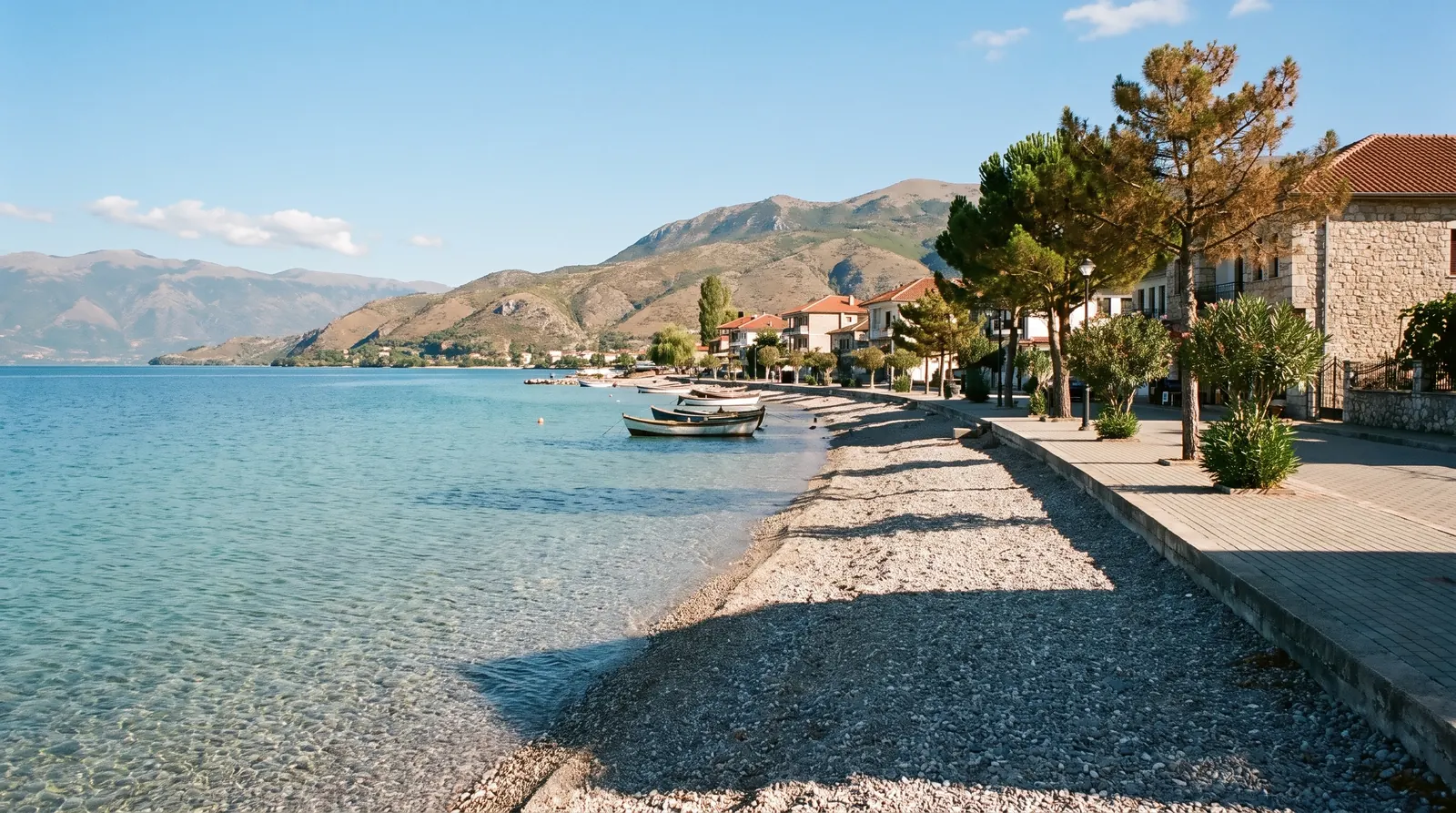
Pogradec sits on the Albanian shore of Lake Ohrid, one of the oldest lakes in the world and a UNESCO site on both sides of the border. It is a lake town in the plain sense: a promenade, a long stony beach, and a row of restaurants all serving the same fish.
The two things worth driving for are just outside it. Drilon, a few kilometres south, is a set of karst springs feeding the lake through a park of channels and plane trees. Lin, on a peninsula to the north, has early Christian floor mosaics on the hill above the village and one of the better views on the lake.
The water is cold, deep and clear, and it does not warm up until June. July and August are the domestic season; September has the same water with the crowd gone, which is the pattern across this country and is truer here than in most places.
Nearby
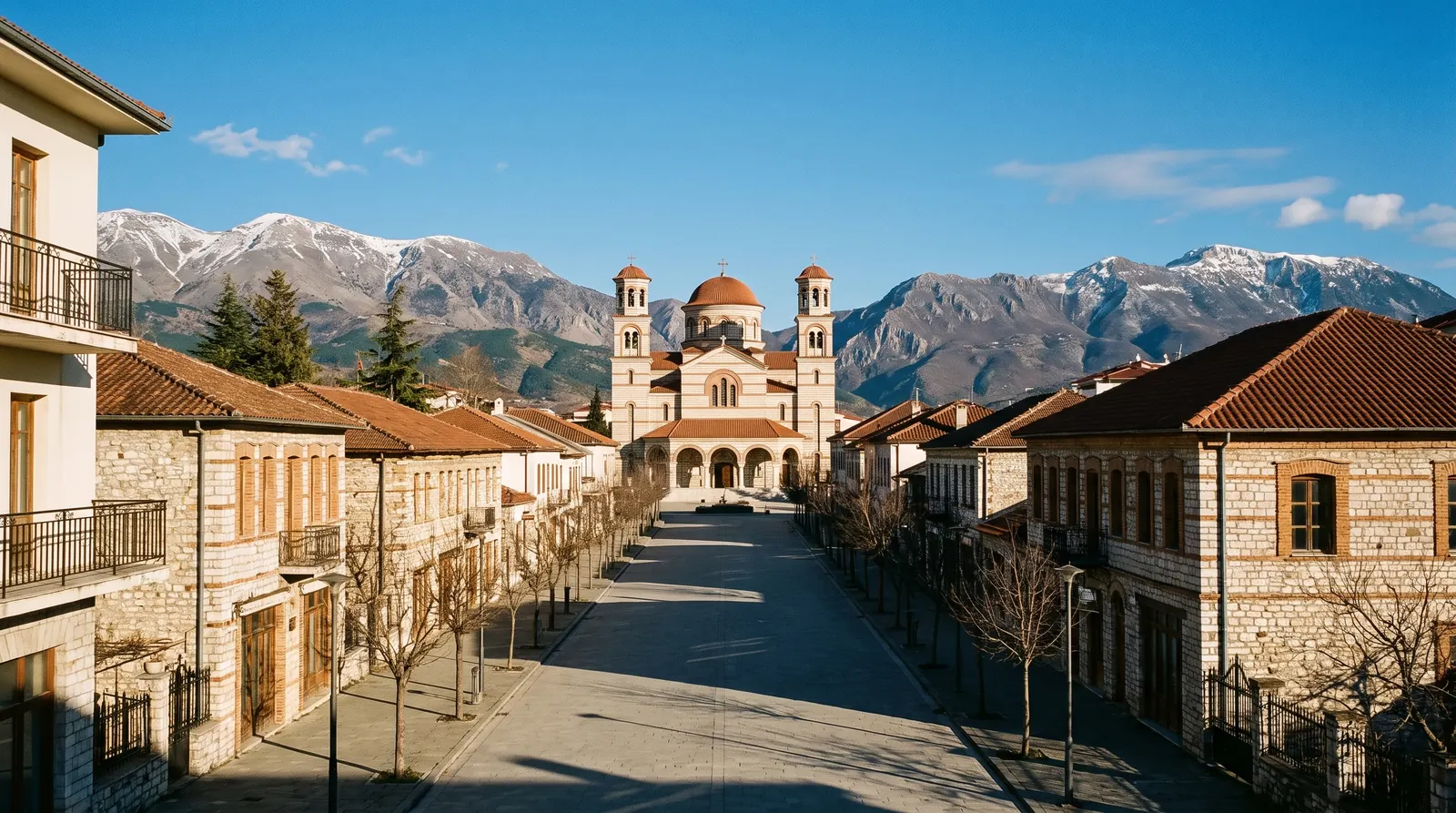 AI imageKorçëHighland Albania at 850 m: a planned nineteenth-century centre, the country's icon collection, and the one town here with a real winter.
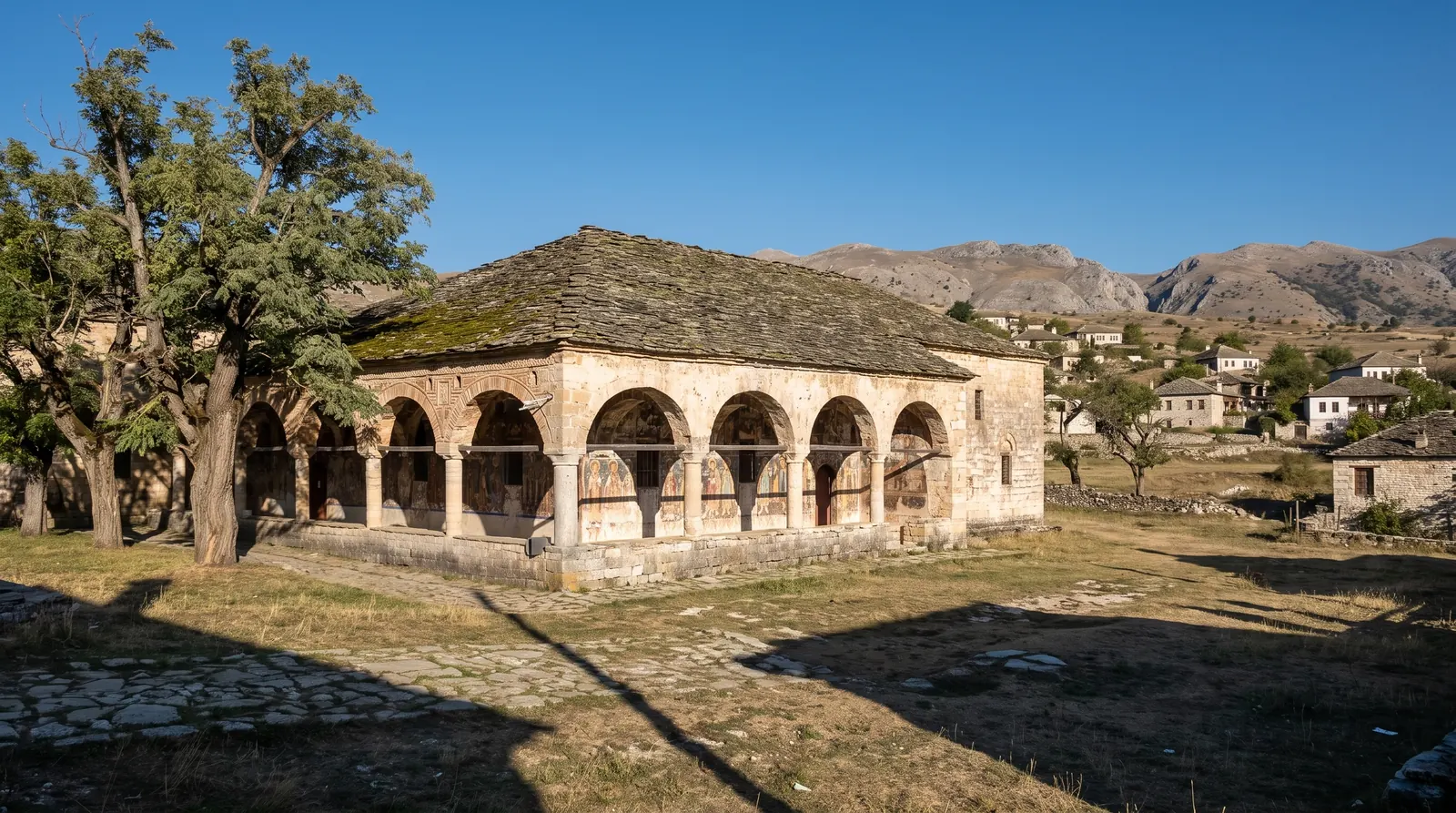 AI imageVoskopojëA village at 1,150 m that was one of the largest cities in the Balkans in the eighteenth century, with several of its painted churches still standing.