The year · October is underlined
| Region | J | F | M | A | M | J | J | A | S | O | N | D |
|---|---|---|---|---|---|---|---|---|---|---|---|---|
| Byllis |
Getting there
car. North-east of Vlorë and about twenty-five kilometres in from the sea, at Hekal in Fier County, on a steep hill at roughly 490 m. It is a drive: there is no useful bus and the last stretch climbs.
Parking: At the site entrance.
Photography
Best light: golden, sunrise.
The subject is the position rather than any one stone: the theatre and the basilica floors read best with the plain behind them. Check drone requirements with the AAC before travelling.
Drone: not confirmed. Albania's registration requirement is reported differently by every secondary source, so verify with the AAC before you fly.
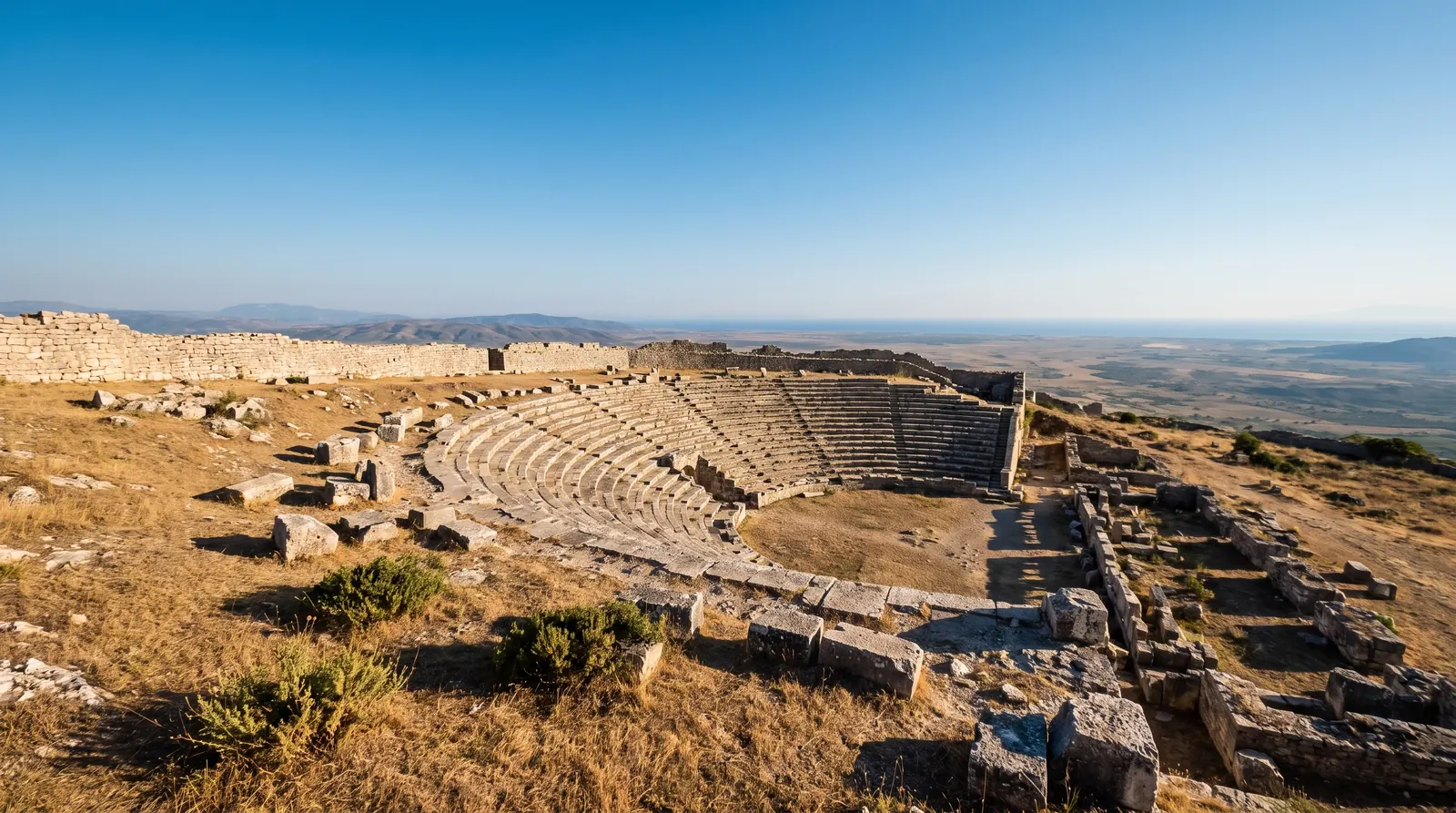
Byllis was founded around 350 BC on the territory of the Illyrian Bylliones, on ground that had already been settled the century before. Its wall runs 2.25 km around a steep hill and encloses thirty hectares, which makes this a city rather than a fort, and the hill is why: it looks out over the plain toward the sea, twenty-five kilometres away.
The Hellenistic city built a stadium, a theatre, an agora, two stoas, a cistern and a peristyle temple. What was excavated later is the surprise: a significant number of basilica churches, their floors laid with mosaics and carvings, from the centuries when this was a Christian city rather than an Illyrian one. Albania has three sites of this class open to a visitor and this is the least visited of them.
It has been a designated archaeological park since 7 April 2003. No admission price or opening hours are printed here because neither could be established: the Ministry's own list of the seven parks carries no prices or hours, and the national ticketing platform sells Butrint and nothing else. Assume it is open in daylight and take cash.
There is no shade on the hill. That is the practical fact that decides the year here, more than rain does: July and August on an unshaded limestone hilltop are a different proposition from the same months at Berat, and the site is at its best in the two weeks either side of the equinox.
Nearby
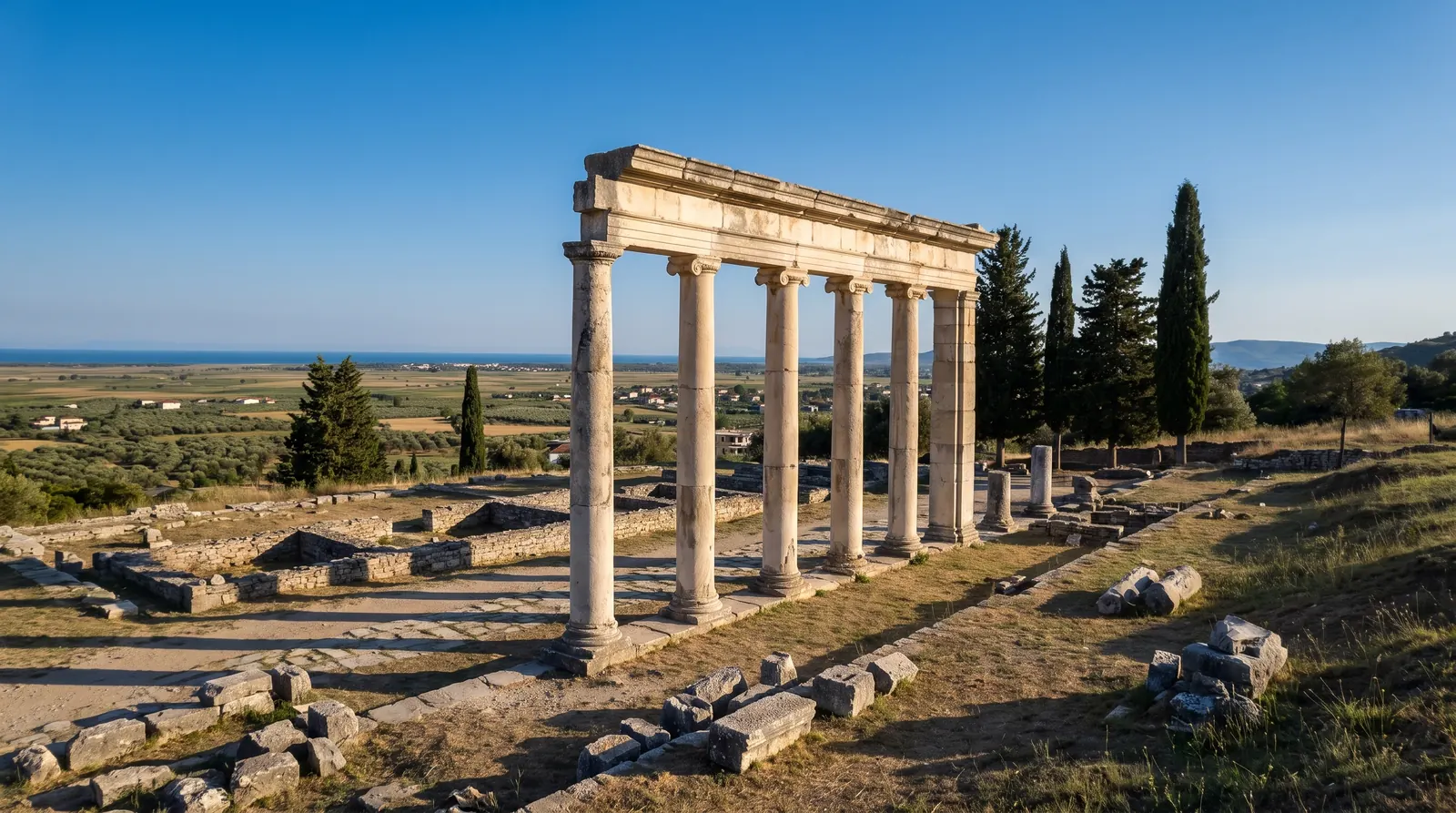 AI imageApolloniaA Greek city on a hill above the Vjosa plain, with a thirteenth-century monastery built out of its stone in the middle of it and almost nobody on the site.
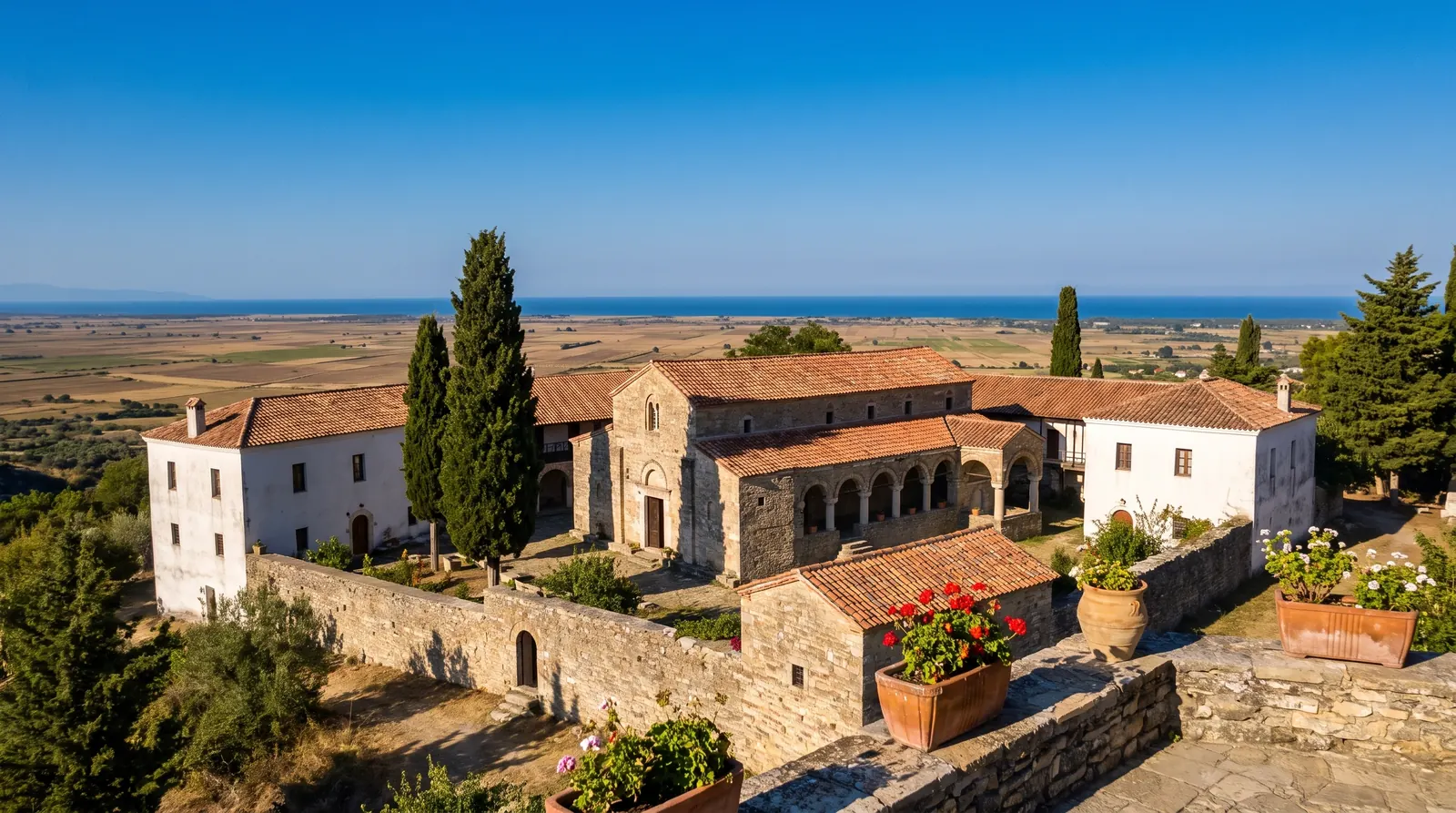 AI imageArdenica MonasteryA working Orthodox monastery on a ridge above the Myzeqe plain, half an hour from Apollonia and open when almost nothing else inland is.
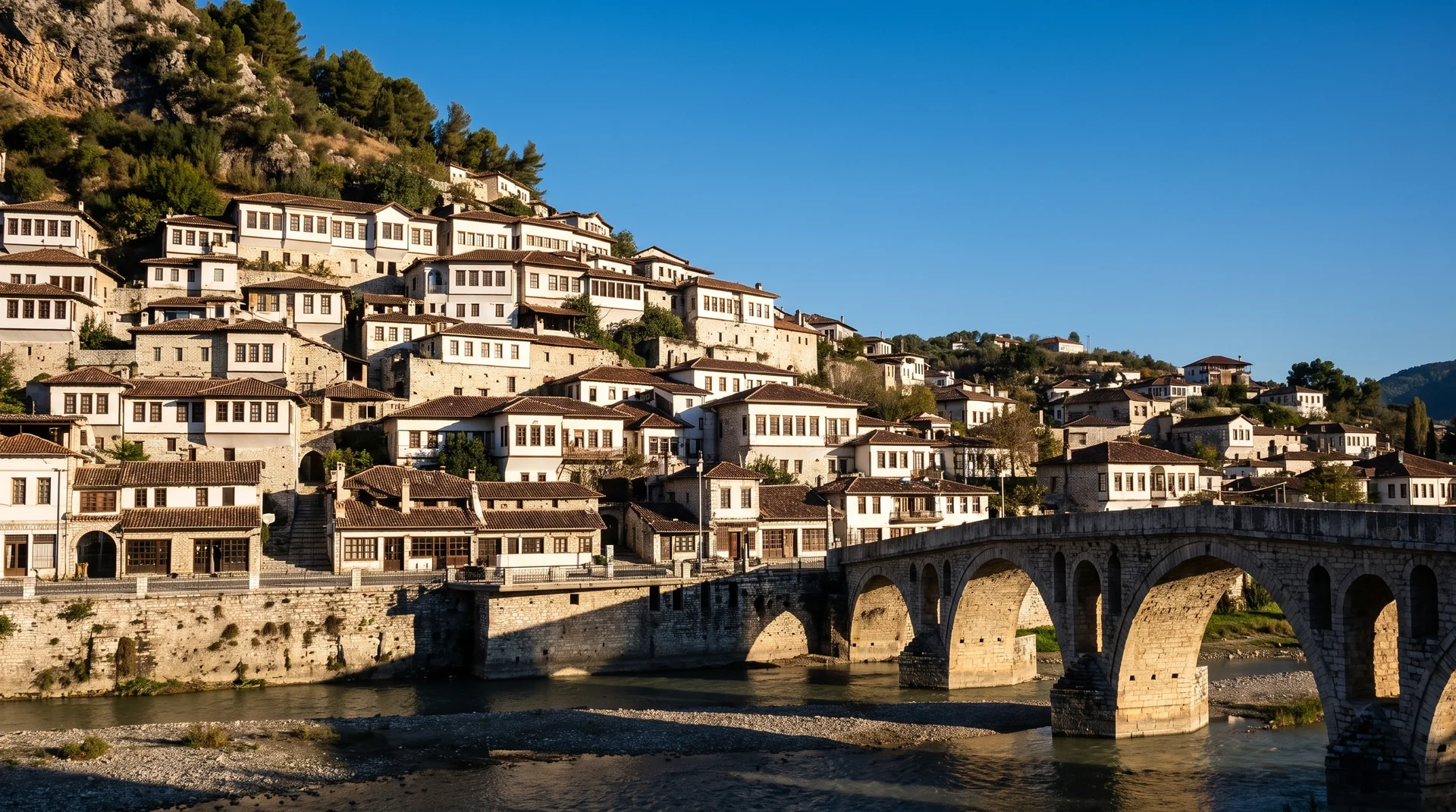 AI imageBeratA UNESCO hillside of stacked Ottoman windows above the Osum, with a castle that is still a lived-in quarter and wine country around it.