The year · October is underlined
| Region | J | F | M | A | M | J | J | A | S | O | N | D |
|---|---|---|---|---|---|---|---|---|---|---|---|---|
| The Durrës amphitheatre |
Getting there
car, bus. In the middle of Durrës, a short walk from the port and the old walls. Getting to the city is easy from anywhere; the site is in the city rather than outside it.
Parking: On the street in the old town, which is tight in summer.
Photography
Best light: morning, golden.
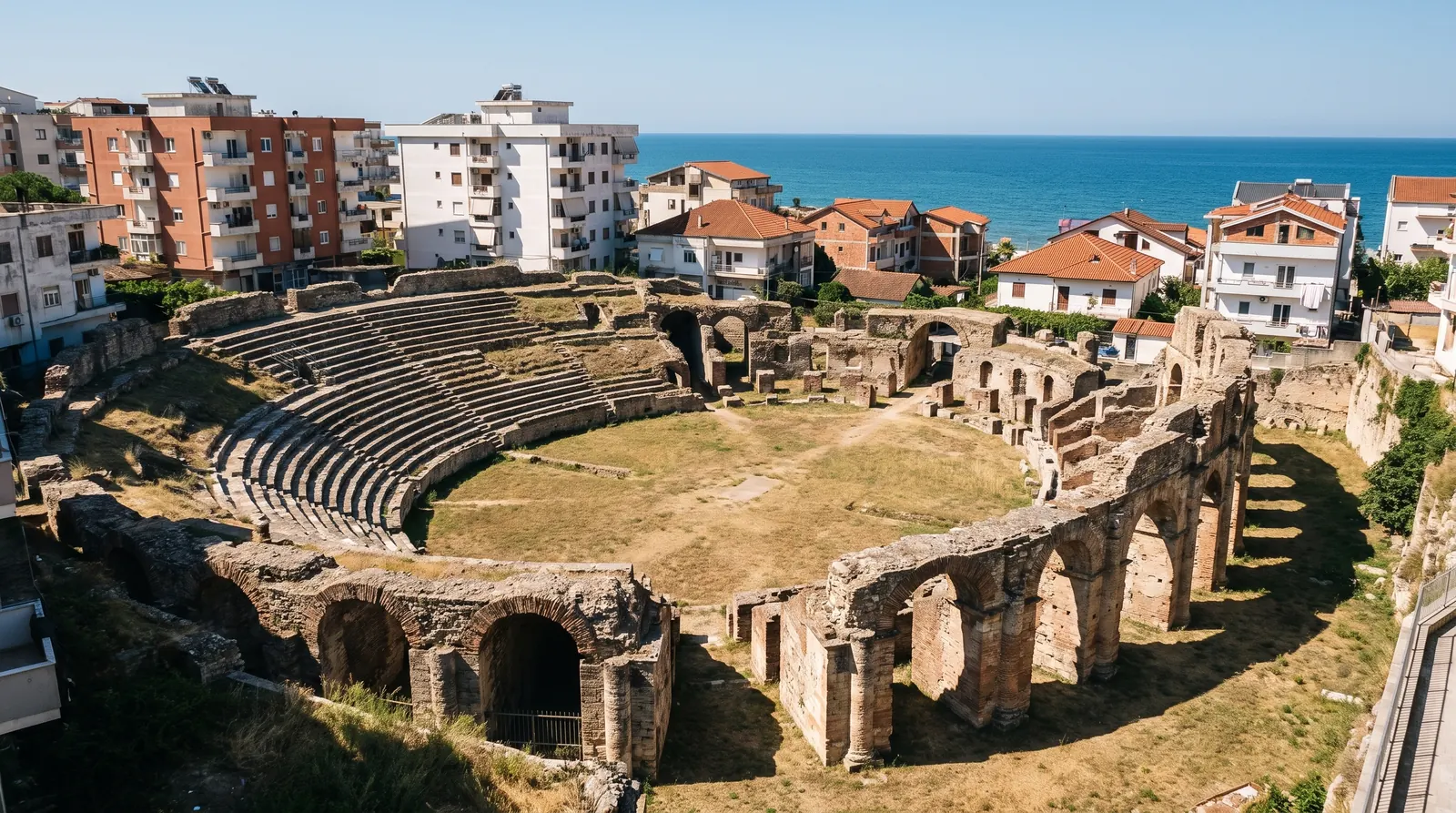
The houses built over the arena are part of the subject rather than a spoiled view, and photographing them honestly is more interesting than framing them out. Check drone requirements with the AAC before travelling.
Drone: not confirmed. Albania's registration requirement is reported differently by every secondary source, so verify with the AAC before you fly.
Construction began under Trajan in the second century AD, and what he built is the largest Roman amphitheatre ever built in the Balkan Peninsula: axes of 132.4 by 113.2 metres, an arena of 61.4 by 42.2, twenty metres high, and room for twenty thousand people in a city that is now a beach resort.
It was lost. The amphitheatre was discovered in late 1966, which is why the town grew over it rather than around it, and a section of the arena itself has been built upon with modern housing. An early Christian chapel was put up inside it in the second half of the fourth century and mosaics were added in the sixth, so the building contains a second, later monument.
It is on Albania's tentative list for UNESCO World Heritage, and it needs to be: the amphitheatre has serious structural deficiencies, and its mosaics and paintings are slowly decaying. That is the honest state of it, and it is a better reason to go now than any superlative.
Nearby
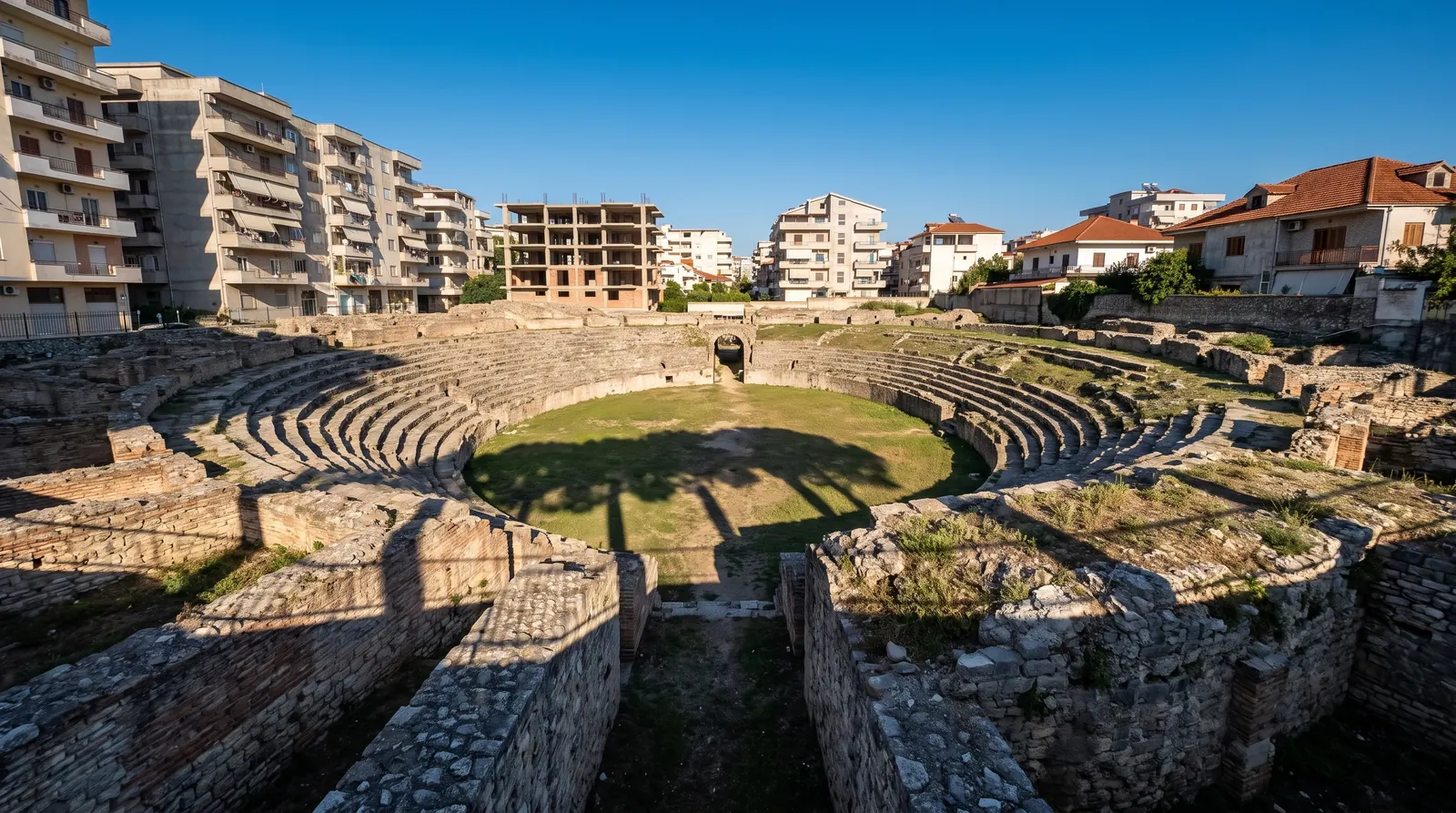 AI imageDurrësThe country's main port and its biggest domestic beach, with the largest Roman amphitheatre in the Balkans in the middle of the town.
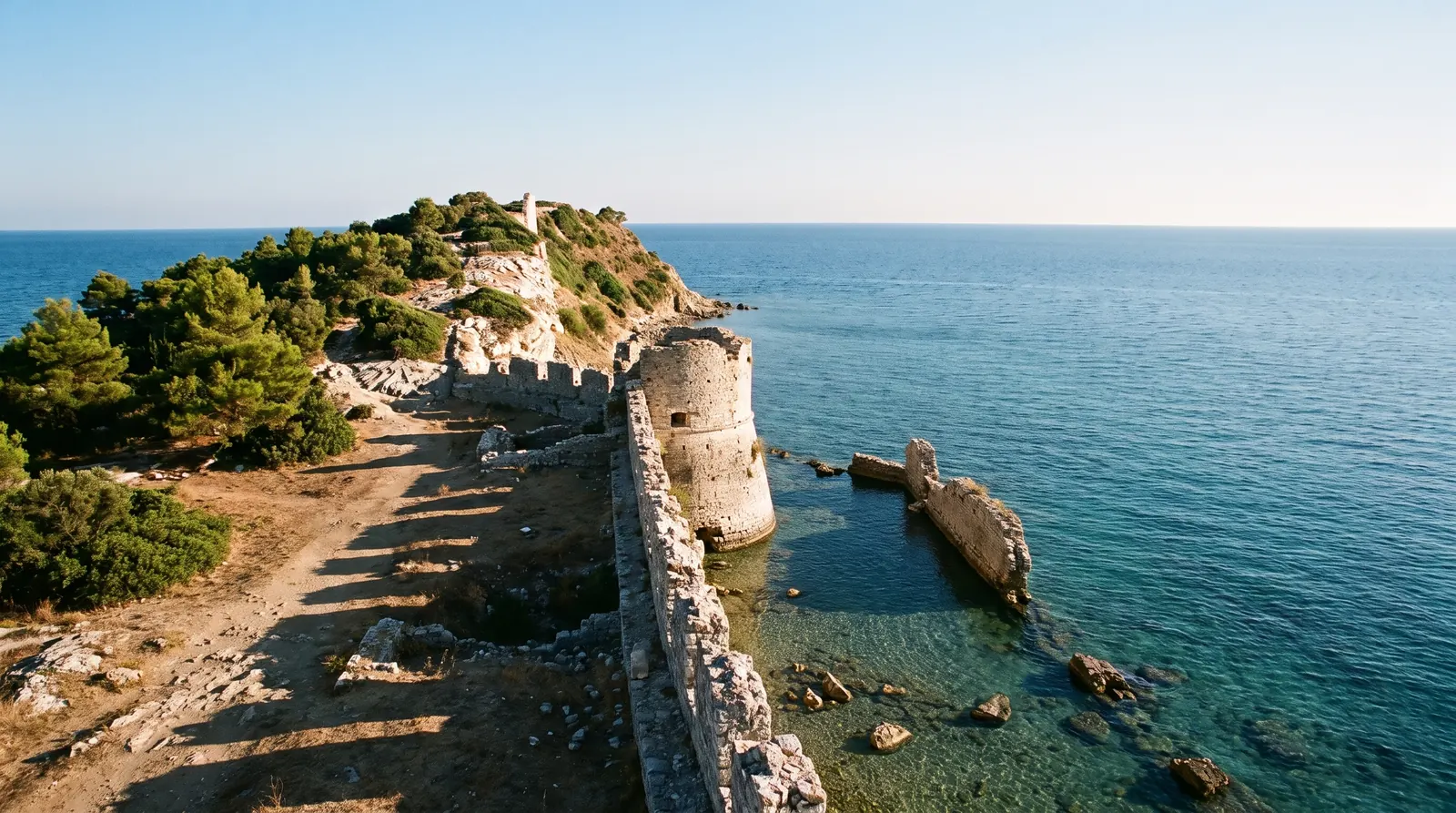 AI imageKepi i RodonitA rocky cape north of Durrës with Skanderbeg's castle on it, part of which the sea has already taken.
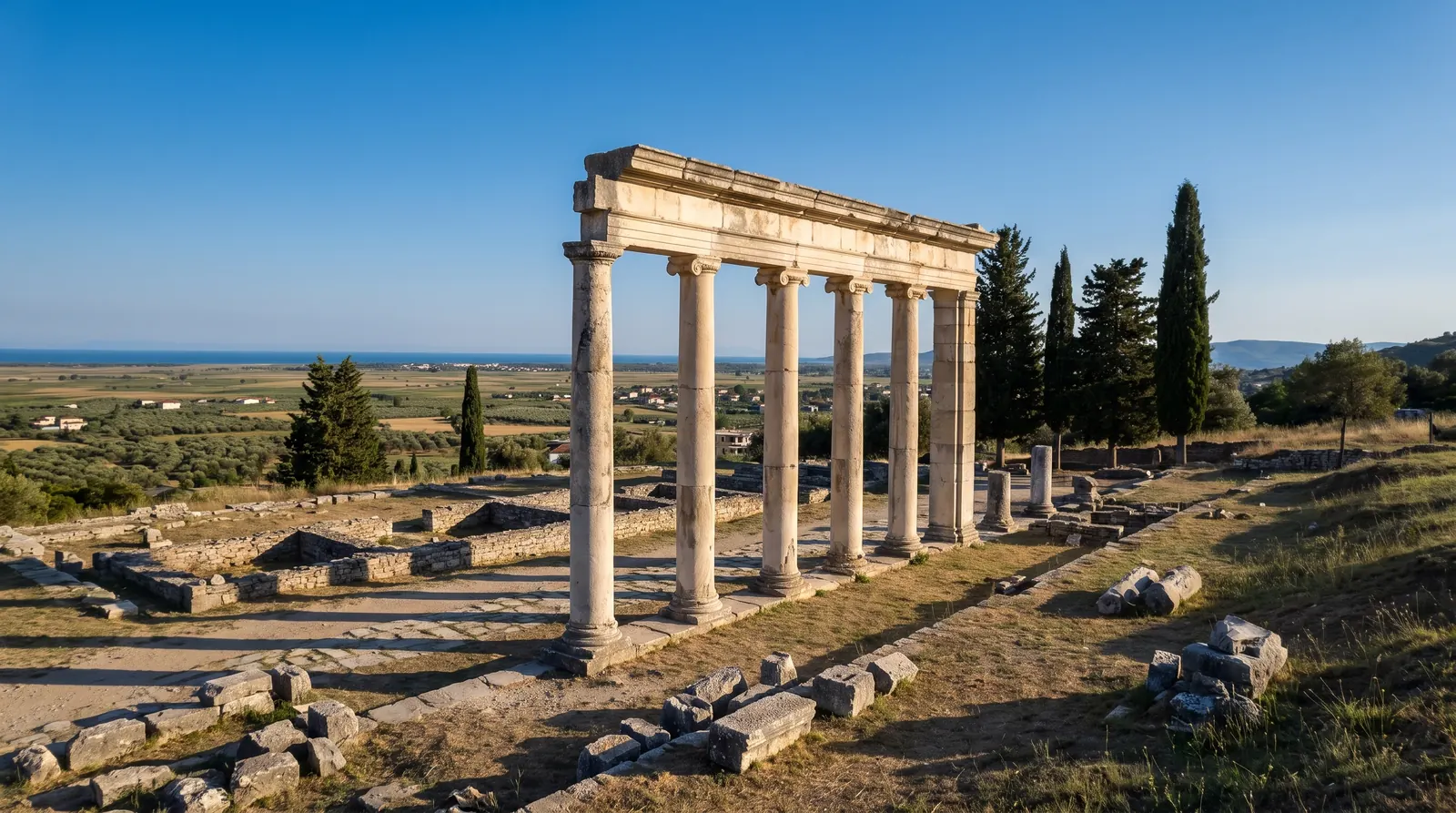 AI imageApolloniaA Greek city on a hill above the Vjosa plain, with a thirteenth-century monastery built out of its stone in the middle of it and almost nobody on the site.