The year · October is underlined
| Region | J | F | M | A | M | J | J | A | S | O | N | D |
|---|---|---|---|---|---|---|---|---|---|---|---|---|
| Kepi i Rodonit |
Getting there
car. A rocky cape on the Adriatic north of Durrës, at sea level. The last stretch is the part to ask about locally rather than to trust a map on.
Parking: At the end of the track, then walk to the walls.
Photography
Best light: golden, blue.
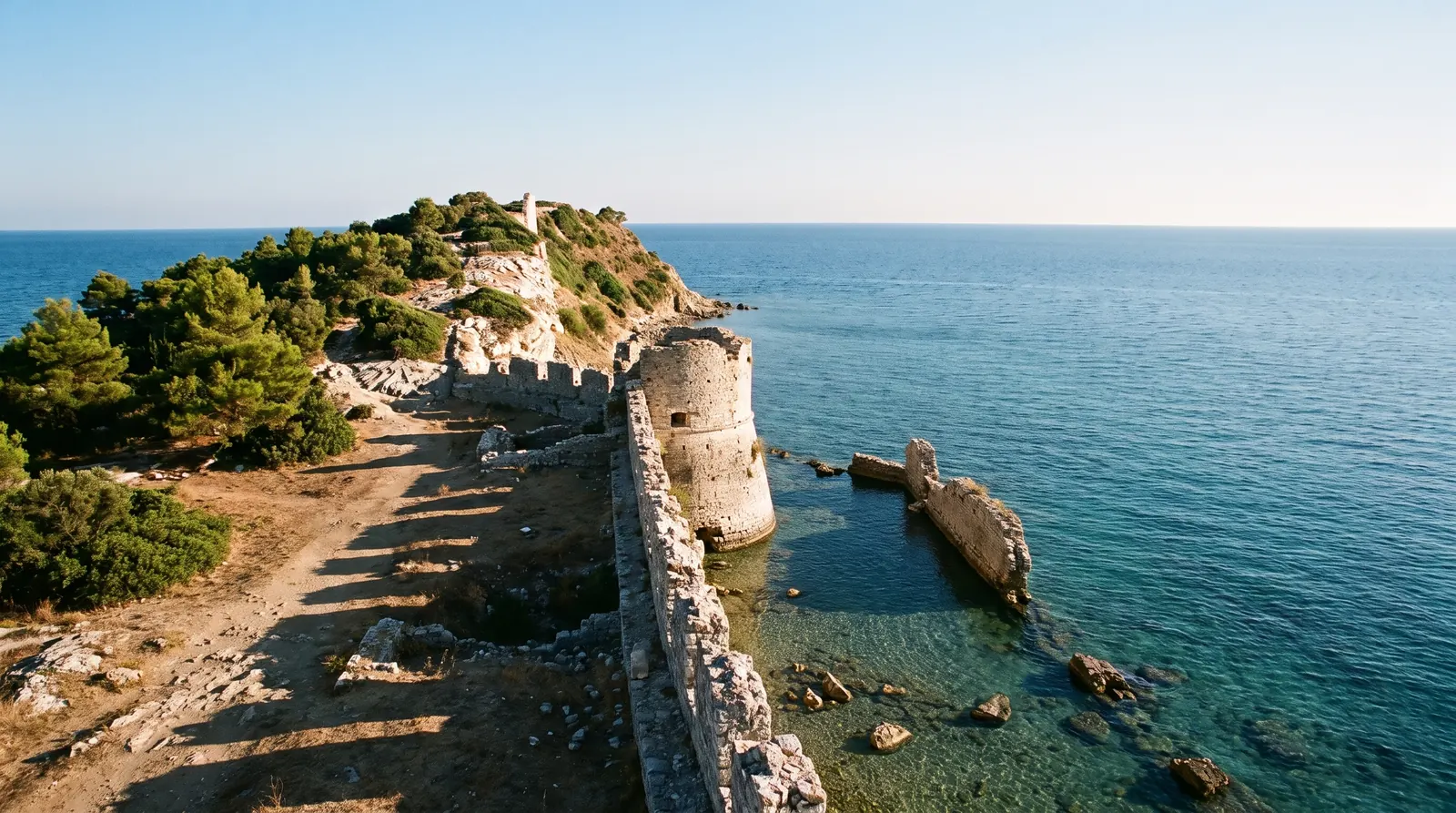
The submerged section of wall is the shot, and it wants low sun and flat water to read at all. Check drone requirements with the AAC before travelling.
Drone: not confirmed. Albania's registration requirement is reported differently by every secondary source, so verify with the AAC before you fly.
Kepi i Rodonit is a rocky cape on the Adriatic north of Durrës, and the reason to drive out to it is the castle Skanderbeg put on the end of it. Construction began in 1450 and it was finished in about 1452, with walls running four hundred metres. Marin Barleti records that Ottoman forces destroyed it in 1467.
Those dates come from the article devoted to the castle. The article devoted to the cape says instead that it was built in 1463, which cannot both be true of a castle completed in 1452. This page follows the dedicated source and prints the disagreement rather than quietly choosing and hoping, because a reader who checks will find the other number.
What makes it worth the detour is not the date. The sea has been working on it: as a result of the corrosive action of the waves, some of the walls now lie under the water of the Adriatic, and what a visitor sees today is the outer wall on the right side and the tower where the two meet. The ruined church of Saint Anthony stands on the same cape, and the bay to the south holds the beach resorts that bring everyone else here.
Nearby
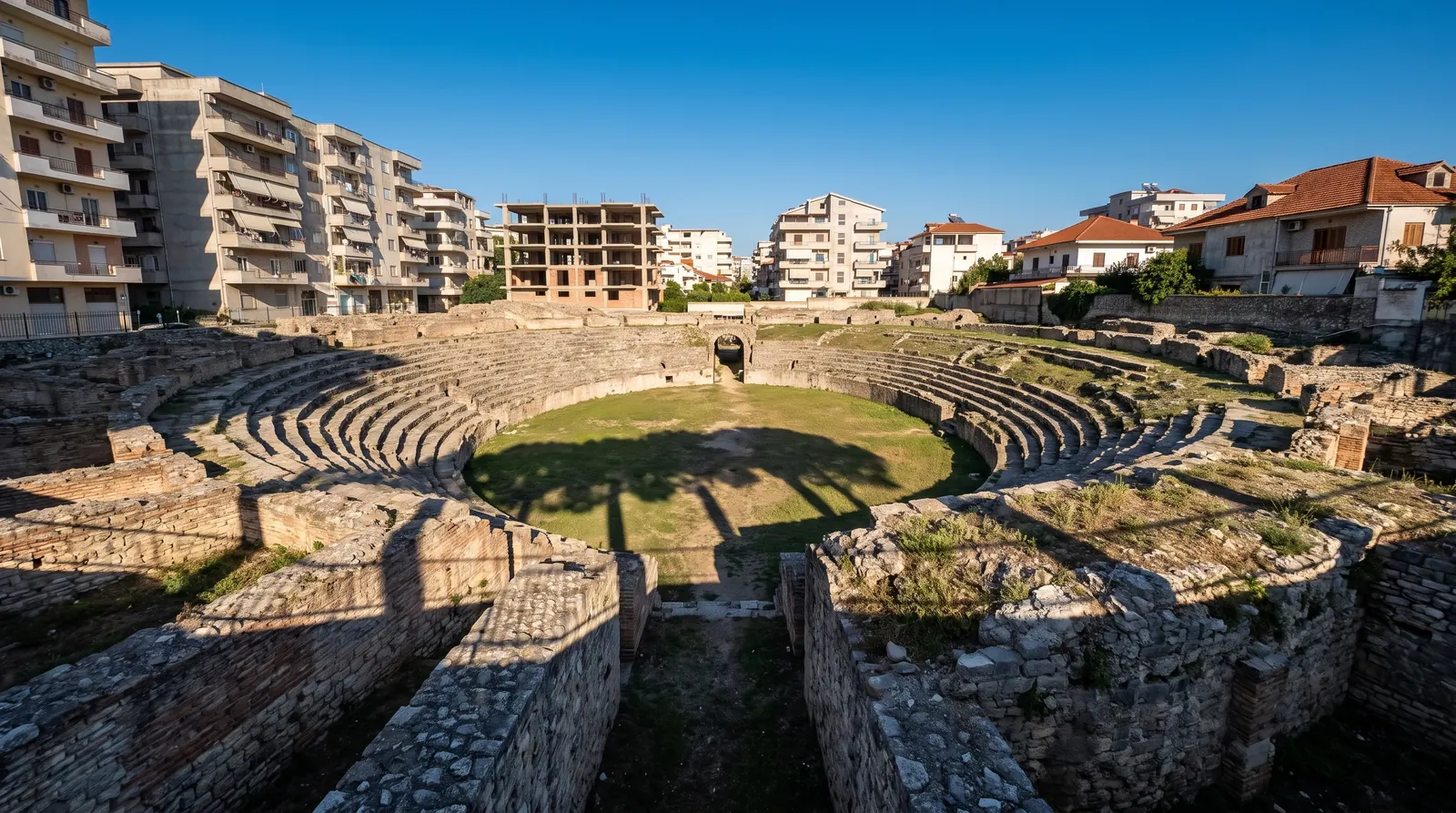 AI imageDurrësThe country's main port and its biggest domestic beach, with the largest Roman amphitheatre in the Balkans in the middle of the town.
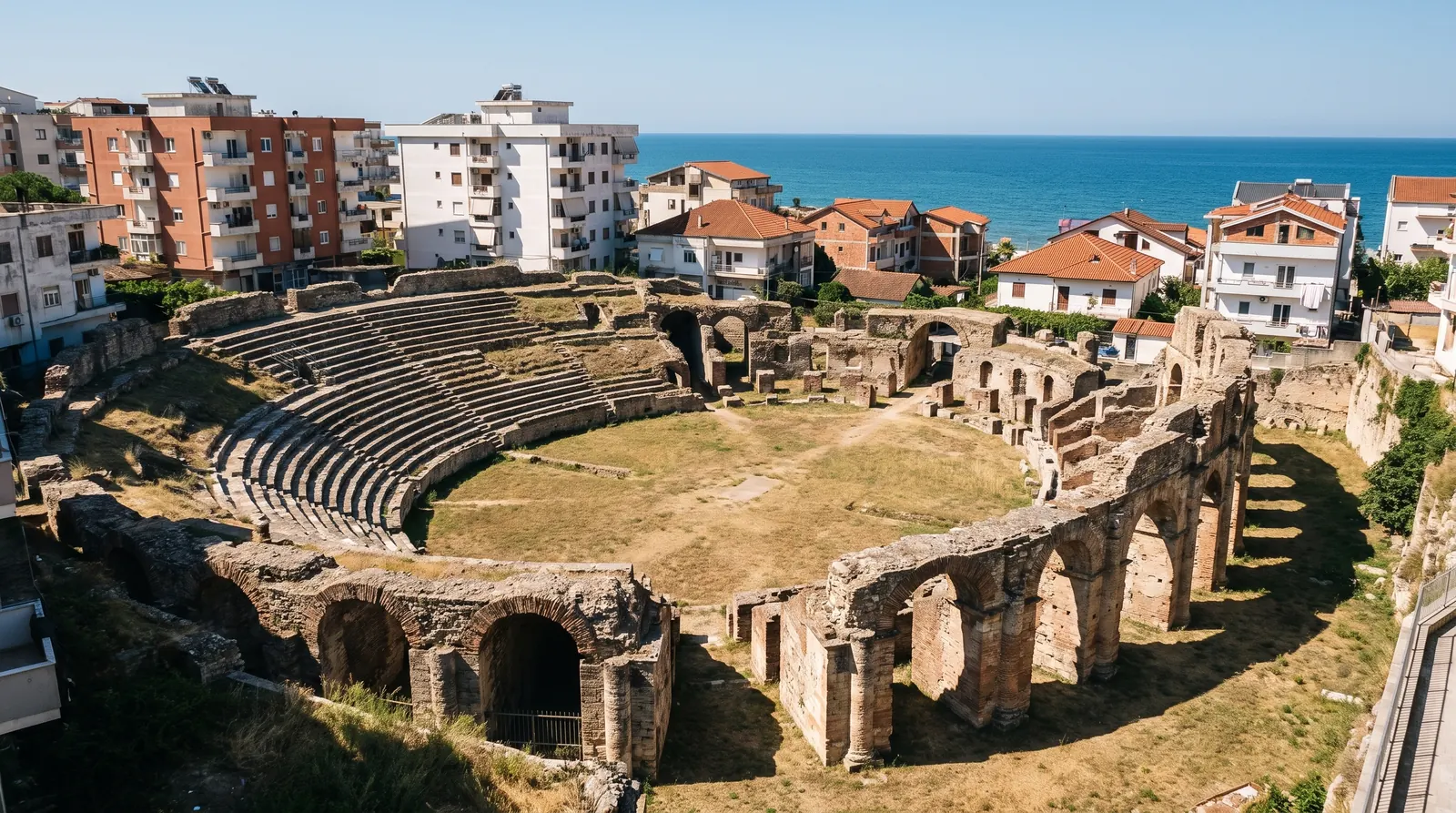 AI imageThe Durrës amphitheatreThe largest Roman amphitheatre in the Balkans, lost until 1966 and still partly under the houses above it.
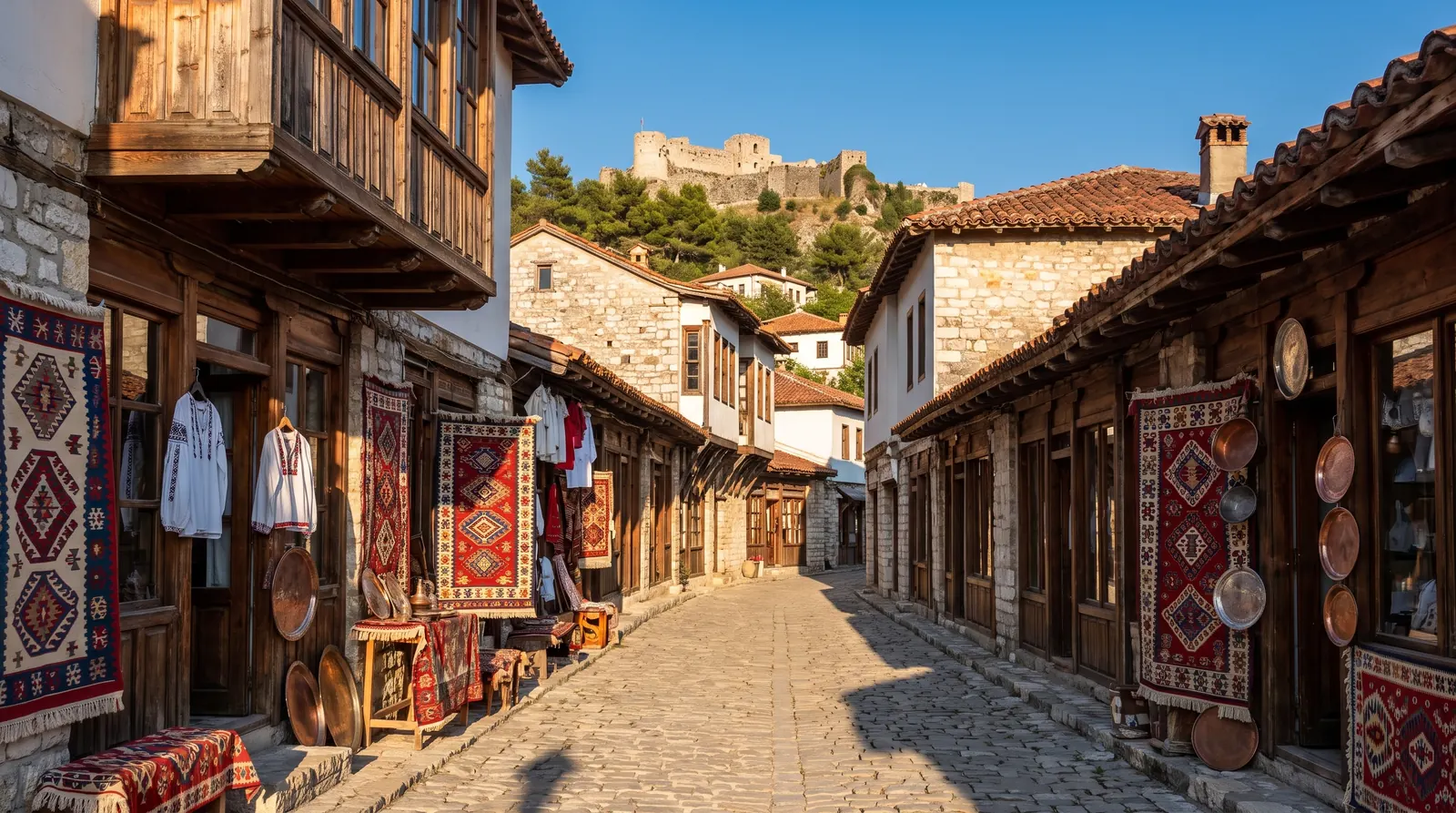 AI imageKrujëSkanderbeg's hill town forty minutes from Tirana: a restored bazaar, a castle on the ridge, and the easiest half-day out of the capital.